
What IsFentanyl?
Fentanyl is a powerful synthetic opioid painkiller used for treating severe pain. Unless administered by a medical professional or prescribed and used under the supervision of a doctor, it can be deadly.
Outside of the medical field, fentanyl is illegally made and used in street drugs and fake prescription pills. It is combined with other drugs in random concentrations to make them cheaper, more powerful, more addictive, and more dangerous. These factors put users at risk of an overdose.
By TheNumbers
Fentanyl is
stronger than heroin.
Source: dea.gov
Fentanyl is
more potent than morphine.
Source: dea.gov
Fentanyl is the
biggest killer of 18–24 year-olds in the U.S.
source: cdc.gov
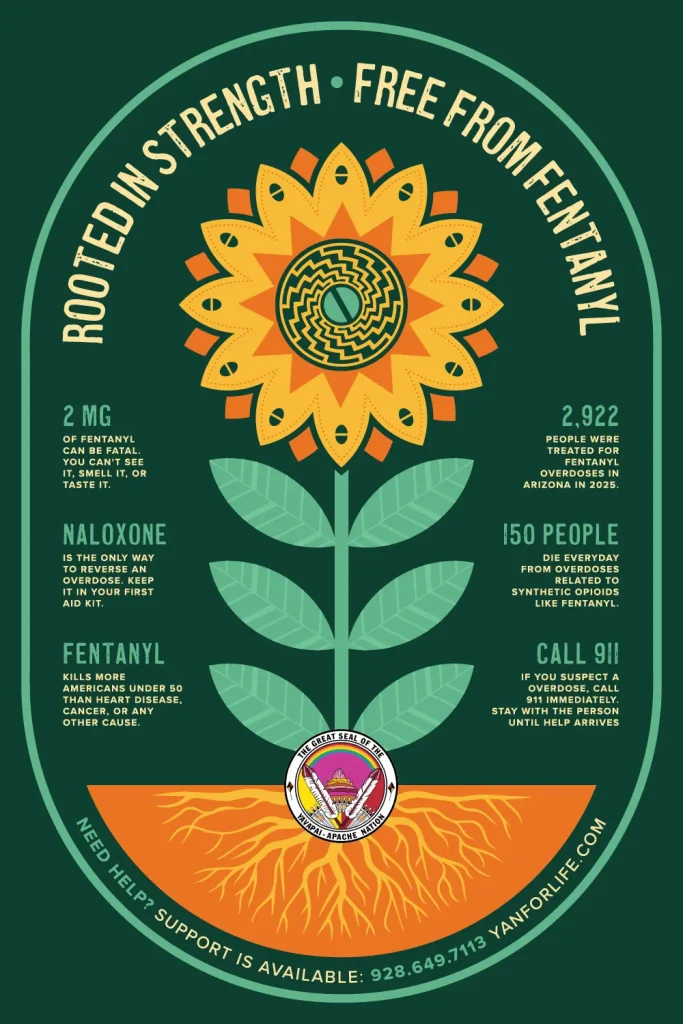
of fentanyl is all it takes to overdose—that's around 2 grains of salt.
Source: dea.gov
of pills laced with fentanyl in 2024 contained a potentially lethal dose.
Source: dea.gov
of overdose deaths in the U.S. in 2024 involved fentanyl.
Source: cdc.gov
of cocaine samples tested in 2024 were laced with fentanyl—that's one in four samples.
Source: dea.gov
of meth samples tested in 2024 were laced with fentanyl—that's one in eight samples.
Source: dea.gov
of known multi-drug mixtures tested in 2024 primarily contained fentanyl or a fentanyl-like opioid.
Source: dea.gov
Arizona residents in 2025 died from overdoses related to opioids like fentanyl—that's over 5 deaths every day.
Source: azdhs.gov
overdose deaths in Yavapai County in 2025 involved fentanyl—that's over half of the county's overdose deaths.
Source: matforce.org
of Arizona's non-fatal overdose events in 2025 involved fentanyl—that's 3,674 overdose events.
Source: azdhs.gov
visits for suspected fentanyl overdose were made to Arizona emergency and inpatient service facilities in 2025.
Source: azdhs.gov
of the 2024 overdose deaths in Arizona had at least one opportunity for intervention—that was 1,809 preventable deaths.
Source: cdc.gov
of the 2024 overdose deaths in Arizona happened with a bystander present—that was 1,028 preventable deaths.
Source: cdc.gov
HonorThe Path
Fentanyl
ReduceHarm
Fentanyl is a tasteless, odorless drug, and it can be impossible to tell it apart from other street drugs or medication. Here are some precautions you can take to protect yourself:
Be Careful Where You Buy Medicine
Fake prescription pills have been marketed and sold as if they were legitimate medication on social media sites and illegal online pharmacies. However, many of these fake pills contain expired medication or are filled with fentanyl or meth. These pills may also be laced with other synthetic opioids (like carfentanil), benzodiazepines (like bromazolam), and veterinary tranquilizers (such as xylazine or medetomidine).
Unless the medicine is prescribed by your doctor and you get it from a licensed pharmacy, assume any pill is not safe.
Test for Fentanyl
Fentanyl test strips are a tool that can reduce the risk of a fentanyl overdose. They typically give results within 2-5 minutes, which can be the difference between life or death.
Quit/ Don't Start
While there are ways to reduce the risk of an overdose, avoiding drug use altogether is the best way to protect yourself. If you are currently using fentanyl or other drugs or medications not prescribed by your doctor, seek help and treatment options to help you recover. If you have never used fentanyl or other drugs, don’t start.
KnowThe Signs
Knowing how fentanyl affects the body can help you recognize if someone is using fentanyl or if they are overdosing. Here are some things to look for:
Side Effects
Depending on how it enters the body, fentanyl can start taking effect as soon as a minute after taking it, and maximum effect can occur within several minutes. Like other opioids, it can cause side effects such as:
- Euphoria, or pleasurable sense of well being and bliss
- Pain relief
- Relaxation
- Drowsiness
- Falling asleep or losing consciousness
- Dizziness
- Confusion
- Slowed breathing
- Nausea
- Constipation
Withdrawal Symptoms
Fentanyl can cause severe withdrawal symptoms that can start as early as a few hours after use. Withdrawal symptoms for fentanyl include:
- Muscle and bone pain
- Sleep problems
- Diarrhea and vomiting
- Cold flashes with goose bumps
- Uncontrollable leg movements
- Severe cravings
Signs of Overdose
Symptoms of an overdose include:
- Confusion
- Falling asleep or losing consciousness
- Difficult to wake up
- Pinpoint pupils
- Clammy skin
- Blue or pale lips or fingernails
- Choking or gurgling sounds
Opioids & Extreme Heat Risks
369 Million
SaveA Life
Quick thinking and acting in the event of an overdose can save a life. If you think someone is overdosing:
Call 911 Immediately
Don’t be afraid to call 911 if you witness an overdose. Under Arizona’s Good Samaritan Law, if you in good faith help someone who is overdosing, you may have protection from legal action.
Tell the dispatcher that “Someone is unresponsive and not breathing.” Give a specific address or a specific description of your location. Answer any questions the dispatcher asks you so they can get the right help to you quickly. Follow any instructions the dispatcher gives you. If appropriate, the dispatcher will instruct you on what to do, including how to give rescue breathing (CPR). Do not hang up until instructed to do so.
Administer Naloxone Immediately
This medication can reverse the effects of an opioid overdose for 60-90 minutes, which can give emergency services more time to get to someone who has overdosed.
If available, give one dose of naloxone by nasal spray or injection. If the person doesn’t respond 2-3 minutes after the initial dose, give a second dose. If symptoms continue, or if they return after disappearing, and enough naloxone is available, continue giving doses every 2-3 minutes until breathing resumes or until emergency services arrive. Do not inject the person with any other substance.
Keep Them Awake and Breathing
Try to wake the person by calling their name, lightly pinching the person, or by rubbing your knuckles on the center or the ribcage. Do not slap, shake, or forcefully try to wake the person.
If the person responds to stimulation, determine if the person can stay awake and breathe on their own. Monitor the person and try to keep them awake and breathing. If the person is unresponsive and stops breathing, provide rescue breathing and chest compressions. Continue until they start breathing on their own or until emergency assistance arrives.
Lay the Person on Their Side
If the person is breathing normally on their own, roll the person on their side to prevent choking. Adjust the top leg so the leg forms a ninety-degree angle. Adjust the bottom arm to form a ninety-degree angle and bend the top arm so the hand rests under the person’s head. Tilt the head back gently to open the airway. This position is known as the recovery position, and it helps keep the person’s airways open, especially in case of vomiting.
If the person stops breathing, return the person to their back, and start rescue breathing and chest compressions. Continue until the person starts breathing again or until emergency workers arrive.
Stay with Them Until Emergency Workers Arrive
While waiting for emergency assistance, monitor the person to make sure they continue breathing normally. Keep the person warm with blankets or dry clothing, if available.
RisingRisks
In recent years, there has been rising amount of overdoses as a result of new drugs being mixed in with fentanyl. Some of these drugs include:
Xylazine
Xylazine is a non-opioid animal tranquilizer that is not approved for human use. It is currently the most common substance has been found mixed with fentanyl and other drugs to make drugs cheaper, more powerful, more long-lasting, and more addictive. In addition to its sedative abilities, it can also cause symptoms like skin infections and wounds. This occurs regardless of how it is used. Combined with fentanyl or other synthetic opioids, xylazine can increase the likelihood of a fatal overdose.
Like fentanyl, it doesn’t take much xylazine to overdose. Unlike fentanyl, the symptoms of a xylazine overdose can’t be reversed by naloxone. If an overdosing individual doesn’t respond to naloxone, xylazine may be involved.
Carfentanil
Carfentanil is the most potent synthetic opioid available commercially, and it is only available legally as a tranquilizer for large animals. Carfentanil is estimated to be 100 times stronger than fentanyl, and it only takes 0.02 mg to overdose.
While overdose deaths from carfentanil are rare compared to other overdose deaths, the number of deaths has increased by 700% since the beginning of 2023. Most carfentanil in 2024 was found in fake medication pills and tablets, but it was also found mixed with fentanyl, fentanyl-related substances, and other drugs such as heroin. Carfentanil is especially dangerous because naloxone may not be effective against it in normal doses. It may take multiple, high doses, and even then, it may not be enough to reverse the overdose on its own.
Bromazolam
Bromazolam is a synthetic benzodiazepine (depressant) structurally similar to alprazolam (Xanax). While alprazolam and other benzodiazepines have been used medically to produce sedation (sleepiness), treat anxiety and muscle spasms, and reduce seizures, bromazolam has never been approved for medical use. It is usually found in pills resembling Xanax or oxycodone, but it is also found in powder and liquid form or mixed in with fentanyl, other opioids, meth, and cocaine.
As a benzodiazepine, bromazolam is not effected by naloxone. However, since it is often found mixed with fentanyl and other opioids, naloxone should still be used in case of an overdose.
Other Synthetic Opioids
Other synthetic opioids have also been found mixed into fentanyl. These drugs tend to have the same side effects as fentanyl, such as slow or no breathing, pinpoint pupils, and unconsciousness. These drugs include:
- Nitazenes
Nitazenes is a fentanyl-like opioid that has never been approved for use in the U.S. or internationally. Nitazenes are usually mixed with fentanyl, heroin, and/or cocaine in powders and pills, and they can increase the potency of each drug, increasing the risk of overdose and addiction. - Para-fluorofentanyl (pFF)
Para-fluorofentanyl (pFF) is another fentanyl-like opioid that, while less potent, can be just as deadly as fentanyl. pFF was the fourth most common drug found mixed with fentanyl in 2024, and it is commonly found in heroin packets and fake pills. - Ortho-methylfentanyl
Ortho-methylfentanyl is a newer synthetic opioid with similar properties to fentanyl and fentanyl analogs. While it was first found in British Columbia, Canada, in 2023, it has started appearing in the U.S. drug supply. It is usually found mixed in with fentanyl, meth, bromazolam, and para-fluorofentanyl (pFF), but it has been mixed into other drugs like cocaine and THC (found in cannabis).
Other Drugs
Other drugs that have been found mixed in with fentanyl include:
- Medetomidine
Medetomidine is an animal tranquilizer that is 200-300 times more potent than xylazine. Like xylazine, it is not affected by naloxone, and it can make reversing an overdose more difficult. When it is found, it is usually found mixed in with fentanyl and xylazine. - Acetaminophen
Acetaminophen is a painkiller found in over-the-counter medications like Tylenol. It was the second most common drug found mixed in with fentanyl in 2024, and it is usually found in fake prescription pills. - Caffeine
Caffeine is a stimulant found in food and drinks as well as in powder or tablet form. It was among the top 10 drugs found mixed in with fentanyl in 2024.
FAQ
What are the side effects of xylazine?
Xylazine takes effect quickly once it is taken. In people, xylazine can cause side effects such as:
- Blurry vision
- Loss of coordination
- Small, constricted pupils
- Dry mouth
- High blood sugar
- Low body temperature
- Slow or shallow breathing
- Dangerously low blood pressure
- Slowed heart rate
- Weakened muscles and reflexes
- Drowsiness or difficulty staying awake
- Painful skin wounds that can become infected, including:
- Skin infections
- Wounds below the skin (abscesses)
- Open, weeping wounds (skin ulcers)
- Necrosis (soft tissue death), which can lead to amputation
- Quick and intense physical dependence
- Severe withdrawal symptoms
- Coma
- Death
What are the side effects of bromazolam?
In its temporary scheduling of bromazolam as a Schedule I drug, the DEA listed adverse side effects such as:
- Slurred speech
- Ataxia (loss of control of bodily movements)
- Altered mental state (unusual changes in awareness, attention, cognition, or consciousness)
- No breathing or slow, shallow breathing
Bromazolam may also share similar side effects to other benzodiazepines, which can include:
- Relaxation
- Confusion
- Mood changes, such as relaxation, hostility, or irritability
- Extreme drowsiness or sleepiness
- Amnesia (partial or total memory loss)
- Vivid or disturbing dreams
- Impaired coordination
- Reduced reflexes
- No breathing or slow, shallow breathing
- Loss of consciousness
- Coma
- Death
What are the legal protections for those prescribing, distributing, or administrating naloxone?
The Arizona’s Revised Statutes provide protections for those who prescribe, distribute, and administer opioid antagonists such as naloxone. These statutes include:
- A.R.S. § 36-2266
Prescribing and dispensing; immunity; definition (in regard to protections for health professionals) - A.R.S. § 36-2267
Administration of opioid antagonist; exemption from civil liability; definition (in regard to protections for individuals) - A.R.S. § 36-2228
Administration of opioid antagonists; training; immunity; designation by director; definition (regarding protections for emergency workers and law enforcement)
Where can I get naloxone?
Free naloxone is available from multiple providers throughout Arizona. A map with locations providing free naloxone is available at the Sonoran Prevention Works website.
Naloxone is also available over the counter without a prescription and can be purchased at most pharmacies or online.
Where can I find fentanyl test strips?
Fentanyl test strips are available for sale. Some options include DanceSafe.org and Dosetest.com.